New teaching communities. A distinct art takes shape.
03 / UNITED STATES
Local academies. A wider international audience.
Knowledge moved in many directions through immigration, teaching, demonstrations and competition. Connections are schematic, not a literal itinerary or promotion chain. Made with Natural Earth. Public-domain map data.
Ordinary training partners keep testing, teaching and sharing what earlier generations passed on.
Chapter 01 / Feudal Japan to 1882
Japan: many schools, shared problems
Jiu jitsu did not begin with one person discovering a secret. Its history begins with people solving difficult problems at close range.
Before there was one name
Traditional Japanese jujutsu developed through many schools, or ryū, rather than a single uniform curriculum. Earlier methods included grappling while armed or armored, restraining an opponent, throwing, joint control and escaping danger. During the Edo period, changing social conditions and encounters outside the battlefield encouraged different emphases. A school preparing someone to grapple around a weapon could reasonably teach differently from one concerned with an unarmored confrontation.
Leverage is part of that inheritance, but it is not magic. Balance, alignment, distance, timing and movement determine how effectively a person can use force. Strength still matters; technical skill changes where and when strength can be applied. This is a useful way to understand the word 'yielding': sometimes the effective response is to redirect pressure, move around it or create a better angle before resisting.
Kano's change of purpose
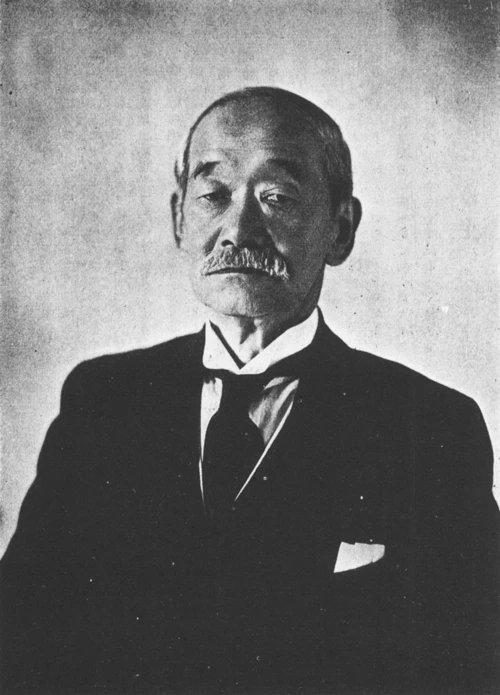
Jigoro Kano (1860 to 1938) studied Tenjin Shin’yō-ryū and Kitō-ryū jujutsu before establishing the Kodokan in 1882. He organized and revised inherited methods around a broader educational project. Physical ability, intellectual understanding and character were meant to develop together. Judo was a practical fighting discipline, but Kano also wanted training to produce people capable of contributing to society.
Randori, or free practice, allowed students to solve problems against a resisting partner within agreed limits. Kata preserved structured study of principles and situations. These were complementary tools rather than competing definitions of authenticity. Restricting some dangerous actions helped make repeated, demanding practice possible. Kano's later maxims connected effective use of mental and physical energy with mutual welfare and benefit.
Traditional jujutsu, Kodokan judo and Brazilian jiu jitsu therefore belong to a connected history, but they are not interchangeable modern programs. Their curricula, objectives and competition rules differ. Brazilian jiu jitsu would develop an especially extensive ground game, while judo's competitive structure would place distinctive importance on throws and particular forms of ground control. None of this means that one generation invented every technique it emphasized.
The journey from Japan to Brazil passed through theaters, immigrant communities, sporting contests and unfamiliar audiences.
Maeda beyond the tidy origin story
Mitsuyo Maeda, known professionally as Conde Koma, was a Kodokan-trained judoka whose international career combined demonstrations, teaching and competitive encounters. The International Judo Federation records his arrival in Brazil in 1914. His work belonged to a wider movement of Japanese practitioners taking grappling abroad, not to a solitary mission that began and ended with one Brazilian family.
Maeda traveled with senior Kodokan practitioner Tsunejiro Tomita during his early American activities. He subsequently worked across countries in Europe and the Americas. Japan's National Diet Library describes contests in which clothing and rules varied according to the opponent. Such settings demanded negotiation as well as technique: what counted as a win, what grips were available, and whether a wrestler would wear a jacket could all change the problem.
Maeda's travels are sometimes compressed into an exact itinerary with greater confidence than the surviving evidence warrants. We retain the well-supported sequence of international work followed by Brazil in 1914, while avoiding a precise American departure date here. Institutional retellings themselves differ on that detail. The central point is secure: Japanese grappling was circulating internationally well before Brazilian jiu jitsu became a distinct global sport.
Why the names overlap
Early audiences often encountered judo under the more familiar spellings jiu-jitsu or jujutsu. The IJF's account of international expansion explicitly follows this overlapping vocabulary through military instruction, public entertainment and commercial teaching. A newspaper's use of 'jiu-jitsu' does not by itself prove that the performance followed a modern Brazilian curriculum, or that the practitioner had abandoned the Kodokan tradition.
Migration helped turn demonstrations into lasting communities. Japanese teachers and immigrants supplied instruction, local students interpreted what they learned, and continued encounters with other grapplers created opportunities for exchange. The route to Brazil is better understood as a network of people and places than as a sealed package handed unchanged from one nation to another.
Brazilian jiu jitsu grew through teaching, resistance, rivalry and experimentation. Its history becomes richer when more people are allowed into the frame.
Carlos, Ferro and the limits of the record
Carlos Gracie Sr. was central to the development and public identity of the Gracie teaching tradition. The familiar family account places him directly under Maeda. Research associated with Robert Drysdale and Opening Closed Guard challenges that formulation, pointing to period reporting that identifies Jacyntho Ferro as the teacher of a man named Oscar Gracie. Drysdale interprets Oscar as probably Carlos. That identification is a historical inference, not a surviving promotion certificate.
The responsible distinction is between association with Maeda’s teaching circle and a fully documented direct instructor relationship. We present the former as context and mark the latter as disputed. Ferro deserves attention as a teacher in that circle. Precisely how long Carlos trained, and the full balance of instruction he received, cannot be reconstructed from the evidence reviewed here. Uncertainty need not erase the contributions of later practitioners.
A family of different approaches
Hélio Gracie became an influential teacher and public representative of the family's approach. His importance does not require the claim that he invented leverage or ground fighting. George Gracie also built an extensive fighting career across grappling and challenge formats. His willingness to work beyond a single branded method complicates any picture of the early family as one perfectly unified technical school.
In 1951, Japanese judoka Masahiko Kimura defeated Hélio with the shoulder lock widely called the kimura in Brazilian jiu jitsu. The encounter is a reminder that the Brazilian and Japanese histories remained connected. A technique's modern name can commemorate an influential match without establishing that the athlete invented the underlying mechanical action.
Carlson Gracie helped build a formidable competitive academy and a teaching culture that produced many influential instructors. Group training, serious preparation and a broad range of successful styles mattered more than the stereotype that his students merely played a forceful top game. Rolls Gracie's study of wrestling, judo and sambo offers another example of cross-training within the art's own history.
Rickson Gracie's performances in Brazil and Japan, together with the documentary Choke, helped extend jiu jitsu's international reputation. Royler Gracie joined competitive achievement with teaching in the Gracie Humaitá tradition. Carlos Gracie Jr. developed Gracie Barra and helped shape organized competition. These contributions were different: public fighting, technical instruction, institution building and coaching are all part of how an art survives.
França, Fadda and access
Luiz França is remembered as Oswaldo Fadda's instructor. Fadda's work in Rio's northern suburbs expanded access beyond prestigious academies and helped establish a durable teaching tradition. Its importance includes who was able to train, not only which names appear above an instructor on a chart. Community access is a historical contribution as meaningful as an important competitive victory.
A qualification matters here too. França is frequently described as a direct Maeda student, but Drysdale reports that substantial evidence for that relationship has not been established. Alternative explanations remain debated. We therefore recognize the França to Fadda tradition without presenting its upstream ancestry as a proven promotion chain. Replacing one overly tidy origin story with another would repeat the same error.
Technique grows between people
The guard allows a practitioner underneath to use the legs to manage distance, disrupt balance and create attacks. Sweeps reverse a top-and-bottom relationship; escapes restore movement from disadvantage; passing removes the opponent's leg barriers; control limits their options before a submission. These ideas became an increasingly detailed language through repeated training and competitive problem solving. They should not be assigned to one inventor merely because a later school made them famous.
UFC 1 changed public awareness. It did not introduce Japanese grappling to America for the first time.
Before the Octagon
Japanese jujutsu and judo were already being taught and discussed in the United States in the early twentieth century. The Theodore Roosevelt Center preserves correspondence concerning Yoshiaki Yamashita, and the White House Historical Association identifies an illustration of Roosevelt learning from him. These records place American interest in Japanese grappling many decades before the emergence of the UFC.
Rorion Gracie's own biography describes his return to the United States after completing law studies in 1978 and his early teaching on mats in a Hermosa Beach garage. Personal networks, challenge encounters, videotapes and later a dedicated academy helped him build an audience. This is a firsthand account of his own career; promotional superlatives in any participant's biography should be read with appropriate caution.
The night the audience changed
Rorion Gracie, Art Davie and their production partners brought UFC 1 to Denver on November 12, 1993. Royce Gracie won three fights that night and the tournament. Viewers saw takedowns, control and submissions defeat opponents whose expertise lay elsewhere. The event made the consequences of being unfamiliar with ground fighting unusually visible to a broad audience.
That demonstration was powerful, but its lesson was more specific than 'one style makes every other style useless.' Rules, matchups and preparation mattered. As MMA developed, fighters improved their wrestling, submission defense and positional awareness. Grappling knowledge became part of a broader skill set. Brazilian jiu jitsu benefited from this exposure while continuing to support training goals beyond professional fighting.
A country of local mats
The American story also includes instructors and communities outside Southern California. Renzo Gracie's New York academy became an important teaching center, developing practitioners who worked across jiu jitsu and MMA. American students, wrestlers, coaches and regional academies helped knowledge travel farther. The growth of the art depended on ordinary teaching relationships as well as famous fights.
For a student in East Alton, that last step matters. International history becomes local through an instructor explaining a movement, a partner providing useful resistance and a room making space for someone new. The community is not an afterthought attached to technique. It is the means by which technique is preserved and improved.
Every ruleset asks a different question. Athletes build strategies around the answers.
Organizing the contest
Brazilian tournaments developed before the modern international circuit. The IBJJF's archive includes the 1994 Brazilian championship, and the first World Championship followed in Rio de Janeiro in 1996. Shared divisions and scoring created common competitive reference points. Carlos Gracie Jr.'s institution building helped carry that framework internationally, alongside the work of athletes, officials, coaches and independent organizers.
The ADCC Submission Fighting World Championship began in 1998. Its official archive records an inaugural field drawn from different grappling backgrounds. No-gi competition allowed jiu jitsu, wrestling and other submission traditions to meet without jacket grips. ADCC is part of the sport's expansion, not proof that no-gi grappling began in 1998.
Systems, not isolated moves
Gi grips can anchor posture, create guard connections and support patient control. Without those grips, athletes depend more on body connection, head and hand position, underhooks and control of limbs. Wrestling supplies routes to takedowns and ways to stand up; guard systems supply ways to attack or recover underneath. Passing and retention evolve together because every successful answer creates a new problem for the other athlete.
Marcelo Garcia’s teaching database demonstrates linked study of butterfly guard, single-leg attacks, transitions and submissions. Roger Gracie’s own academy records ten IBJJF world titles. His teaching platform includes detailed courses on pressure passing, mount and side control. These are complementary examples of depth. The art’s evolution does not require declaring familiar positions obsolete whenever a new system becomes fashionable.
André Galvão's coaching work and the development of Kade and Tye Ruotolo show another form of continuity between generations. Rafael and Guilherme Mendes built Art of Jiu Jitsu as competitors and teachers. Renzo Gracie's academy, John Danaher's instruction and Gordon Ryan's competitive work are part of modern no-gi's expanding technical conversation. None should be described as the sole inventor of systematic grappling.
Leg entanglements and heel hooks changed the strategic demands of many no-gi matches, but leg attacks themselves are older. Federation rules also differ: the IBJJF introduced heel hooks and knee reaping for adult brown- and black belt no-gi divisions from January 1, 2021. Permission in one division is not permission in every class, age group or tournament.
A developing professional landscape
Submission-only events and professional invitations place different incentives around pace, control and finishing. The inaugural Craig Jones Invitational took place in 2024, with Kade Ruotolo and Nick Rodriguez winning its two men's tournaments. UFC BJJ launched in 2025; its first event on June 25 included Mikey Musumeci in the headline match. These are examples of a changing professional landscape, not a final destination for the art.
Video libraries, online instruction and searchable match archives let students compare ideas across continents. That access is valuable when paired with careful practice. Watching a solution is different from recognizing its conditions and applying it against resistance. The useful test remains what a practitioner can understand, perform, adapt and explain safely on the mat.
Women's history is not an appendix to jiu jitsu. It changes how we understand who built the sport, who could enter it and who could lead.
Making room to compete
Yvone Duarte is widely recognized as the first woman to receive a Brazilian jiu jitsu black belt, awarded by Osvaldo Alves in October 1990. Her story includes campaigning for women's competition opportunities in the 1980s and later building her own teaching team. The historical importance is not confined to a belt ceremony: women had to organize for a competitive place that is easier to take for granted today.
In an extensive 2021 interview, Duarte described the work behind an early women's tournament in 1985 and her later teaching for women and marginalized groups. Her account highlights confidence, consent and a training environment responsive to the person in front of the instructor. These are firsthand recollections, and precise 'first ever' claims should remain qualified when records are incomplete.
Champions become teachers
Leticia Ribeiro's contribution includes both high-level competition and the development of students. Her career connects achievement with the patient work of coaching. Beatriz Mesquita became a leading champion of the next generation and is recognized in the IBJJF Hall of Fame. Together their careers demonstrate that influence is multiplied when an accomplished athlete becomes an effective teacher.
Michelle Nicolini brought success across gi, no-gi and later MMA. ONE Championship's athlete biography records eight IBJJF world titles and an ADCC title. Her career broadens the historical picture beyond a single academy or competitive format. Kyra Gracie, also recognized by the IBJJF Hall of Fame, established her own substantial competitive identity within a surname more often associated with male practitioners.
Mackenzie Dern's grappling accomplishments included the 2015 ADCC title and world titles before her MMA career. Ffion Davies won the women's under-60-kilogram division at ADCC in 2022. Their careers illustrate different routes into international prominence: inherited family connections can matter, and so can the development of strong programs far beyond Brazil's original centers.
A fuller measure of influence
The IBJJF Hall of Fame also recognizes women including Hannette Staack, Bianca Andrade, Luanna Alzuguir and Gabrielle Garcia. A short list cannot represent every pioneering coach or local organizer. It can remind us to look beyond the most marketable names. Athletes make history through performances; instructors and organizers also make it by keeping opportunities open for the next person.
At club level, meaningful respect is practical. Partners need appropriate resistance, room to learn, clear boundaries and coaches who take concerns seriously. Women's participation should not be treated as proof that everyone has the same experience. An enduring training culture listens to people and adjusts conditions so that skill can develop without unnecessary intimidation.
Respecting tradition and continuing to question are compatible responsibilities.
One art, several purposes
Self-defense, gi competition, no-gi submission grappling, MMA, youth development and recreational training overlap without asking identical questions. A position that scores well in a tournament may need adjustment when strikes are possible. A champion's preparation may be unsuitable for a new student's current abilities. Good instruction begins by identifying the task and the person, then choosing methods that serve both.
Innovation deserves testing rather than automatic celebration. Older methods deserve study rather than automatic obedience. The useful question is what a method accomplishes, under which conditions and at what cost. Historical awareness can make a coach less rigid and less vulnerable to fashion: previous generations also argued, borrowed, experimented and revised.
Our responsibility at Oddfellows
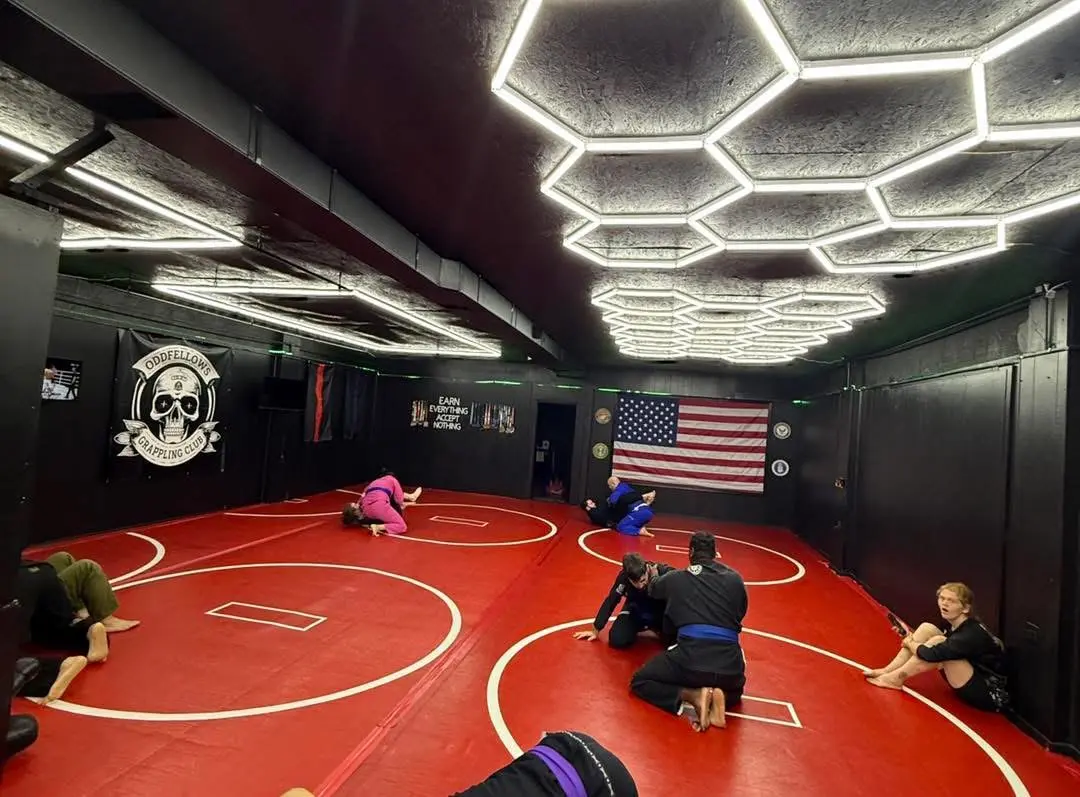
Oddfellows' place in this history is modest and concrete. We receive knowledge through our teachers, test our understanding with our partners and take responsibility for what we pass on. Andrew Carr's volunteer teaching and the club's FDS values belong to that local commitment. They do not imply that earlier instructors personally endorse our academy.
Family means the people beside us matter as much as the techniques. Dedication means accepting repetition, uncertainty and the time understanding requires. Strength includes technical ability, confidence, resilience and the judgment to protect a training partner. These values become real through conduct on ordinary training nights, not through a lineage chart alone.
Preserve what works. Question what does not. Keep learning. Test your understanding. Help the people beside you improve. In East Alton, as in communities around the world, the next part of jiu jitsu's history is written by people who continue to show up for each other.
Institutional histories, firsthand interviews, championship archives and published research each answer different questions. A family or academy biography is evidence of what that institution reports, not independent proof of every origin claim. Drysdale’s interpretations are attributed to him; the underlying period documents have not all been independently reexamined for this edition.
We do not claim an ancient single founder, a perfect sequence of belt ceremonies or a sole inventor of leverage. Maeda’s direct instruction of Carlos Gracie remains disputed. The upstream ancestry often given for Luiz França is also not established by the evidence reviewed here.
Historical research checked October 19, 2026. Contemporary events are examples rather than a complete championship census. Our final chapter expresses the club’s educational philosophy.
A useful detail, a patient explanation, a round with honest resistance. History reaches East Alton through those everyday acts. Take a question from these chapters back to your next practice.